Hey beautiful people,
Some recipes you just cook. Others feel like a rite of passage. This one is the second kind.
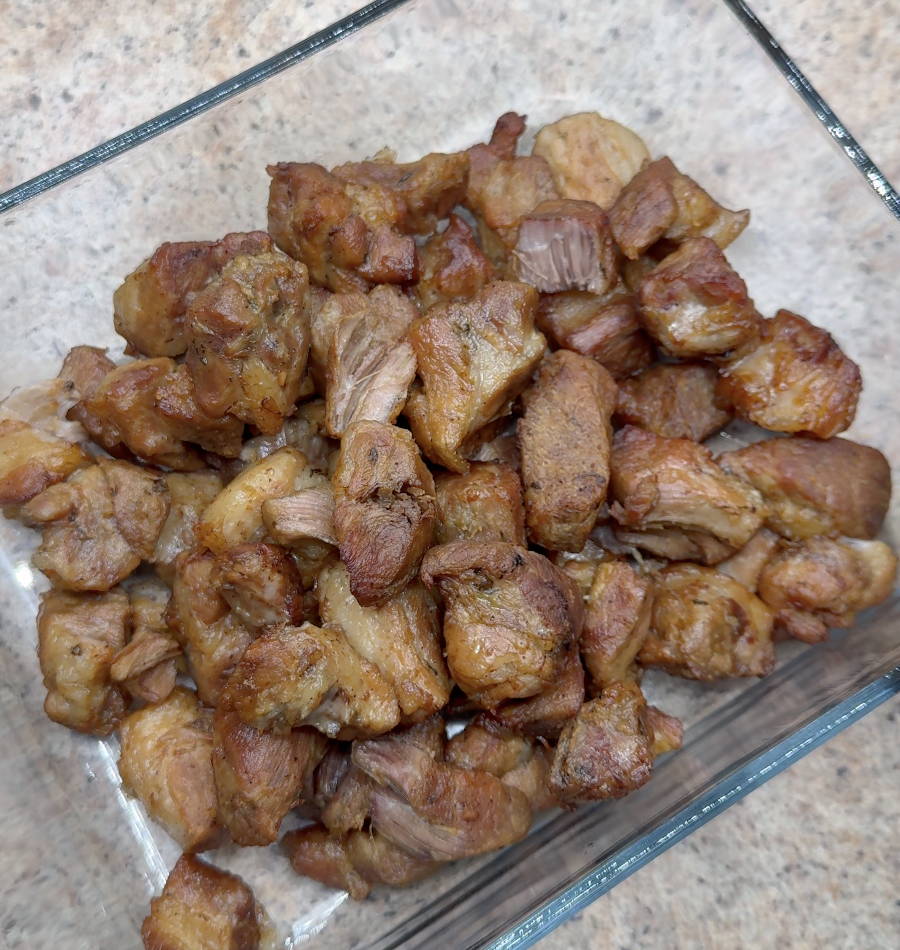
Haitian griyo, sometimes known simply as fried pork, is a dish I’m genuinely grateful to have learned properly. And when I say properly, I mean learned from my mom, who grew up cooking Haitian food the real way. If she’s ever cooked for you, you already know exactly what I mean.
Before we get into it, one important note straight from her: no garlic. None. If you add garlic, in her words, it’s no longer griyo. I take her word as law in my kitchen, so you won’t find a single clove in this recipe.
What You’ll Need
- 3 lbs pork shoulder, cut into 2-inch cubes
- 1 sour orange (or substitute: white vinegar and water)
- 1–2 chicken bouillon cubes
- 1 tbsp fresh or dried parsley, to taste
- 2 tsp fresh thyme (or 1 tsp dried, since dried thyme is more concentrated)
- 3–4 stalks scallions, roughly chopped
- 4–6 whole cloves
- 1–1½ tsp black pepper
- 1 whole hot pepper (optional)
- Water, for boiling and rinsing
Editor’s note: no garlic in this recipe. It’s a deliberate, traditional choice, not an oversight.
How to Make Haitian Griyo
Step 1: Cut the Pork
If you live near a butcher, ask them to cut the pork shoulder into 2-inch cubes for you. If you don’t have access to one, you can absolutely do this at home. Just cut the meat into nice, medium-sized chunks. Keep in mind that pork shrinks as it cooks, so if you cut the pieces too small to start, you’ll end up with tiny, overcooked bits by the time it’s done.
Step 2: Clean the Meat
Clean the cubed pork with the sour orange. If sour oranges aren’t available where you live, a mix of vinegar and water works just as well. Let the meat sit in the cleaning liquid for a bit, then rinse thoroughly.
Once rinsed, pour boiling hot water over the meat and drain it. Repeat this step one more time, then gently squeeze out any excess water. Place the cleaned pieces into a bowl, ready for seasoning.

Step 3: Season the Pork
In the pot you’ll use to boil the meat, season the pork with the chicken bouillon cubes, parsley, thyme, scallion, black pepper, and cloves. Rub the seasoning into every piece so it’s evenly coated.

Step 4: Boil Until Tender
Cover the pot and let the pork cook over very low heat until fully tender. You’ll know it’s ready when a piece shreds apart easily with almost no resistance.

Step 5: Bake to a Deep Brown
Strain the pork pieces from the pot and arrange them on a rack or tray. Bake at 350°F for 15–20 minutes, or until the meat is a deep, dark brown.
You can pan-fry the pork in oil on the stovetop instead, but between the mess and the risk of oil splatter, baking is the safer, easier, and healthier route and yields just as good a result.


Tips for the Best Griyo
- Don’t cut the pork too small. It shrinks a lot during boiling, so aim for cubes on the larger side of medium.
- Skip the garlic. Trust the tradition here; it’s what keeps this dish authentically griyo.
- Keep the boil low and slow. A gentle simmer is what makes the meat fall-apart tender before it ever hits the oven.
- Watch it in the final minutes of baking. Ovens vary, and you want a deep brown color without drying the meat out.
What to Serve It With

Griyo is incredibly versatile and pairs well with almost anything, but a few classic combinations really let it shine:
- Fried plantains
- Rice and peas (diri kole)
- A side of pikliz, if you like a spicy, tangy contrast to the richness of the pork
Storage and Reheating
Store leftover griyo in an airtight container in the fridge for up to 3–4 days. To reheat, use the oven or an air fryer to bring back that crispy exterior. The microwave will work in a pinch, but it softens the outside, so use it only if you’re not fussy about texture.
FAQ
Why is there no garlic in this recipe? Traditional griyo, at least in my family, is made without garlic. It’s considered essential to keeping the dish authentic.
Can I substitute the sour orange? Yes. A mix of vinegar and water works well if sour oranges aren’t available near you.
Can I fry the pork instead of baking it? You can, but baking is recommended here. It’s easier to manage, safer, and healthier, while still delivering that deep brown, crispy result.
Why do you boil the meat before baking it? Boiling first is what makes the pork tender enough to shred easily. Baking afterward is what gives it that signature crispy, deep brown exterior.
That’s it. You’ve made Haitian griyo. What you pair it with from here is entirely up to you, though I’d start with fried plantains or rice and peas if you want the full experience.
If you make this, I’d love to hear how it turns out, and if your family has its own griyo tradition, tell me about it in the comments.
Loved this one? Tap the thumbs up below so I know to keep these coming.